Showing posts with label G321 Thriller research. Show all posts

Friday, 5 March 2010

How do 'The Third Man' ,director Carol Reed and 'Insomnia',director Erik Skjoldbjaerg use the conventions of a thriller

The Chase scenes


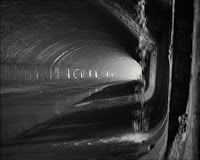
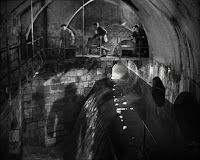
In Insomnia and The Third Man they both have similar chase scenes which involves the detective (Jonas and Holly Martins, even though Holly Martins isn't a professional detective he does take on the role in the movie) chasing after the criminal. In The Third Man they use a sewer to chase the criminal through which creates a maze because there are several places for the criminal to run too and it is difficult for the detectives to find the criminal. Carol Reed uses backlighting to create silhouettes to create the feeling of being followed. In Insomnia they use the fog to create the same feeling The Third Man does. Jonas is lost in the fog while trying to chase the killer, and the effect of the fog creates the feeling of being lost and blind because you can't see anything, so Jonas doesn't know what he is running towards or shooting at which creates suspense.
Femme Fatales


A 'Femme Fatale' is french for fatal woman. The Femme Fatale is a woman who is seductive and leads men into dangerous and compromising situations. The Femme Fatale uses her beauty, charm and sexual allure. In The Third Man the Femme Fatale is Anna who is an actress and the lover of Harry Lime who faked her a passport so she wouldn't be sent out of Vienna. Anna is a Femme Fatale because she uses Harry Lime's attraction for her to her own advantage because he can help her from being deported, and Martins set up Lime for Anna's freedom and at the end of the movie Anna ignores Holly Martins which shows she used Martins like she did Lime. In Insomnia the Femme Fatale is less obvious because she could be the murdered girl at the beginning of the movie, Tanja, or Tanja's class friend Froya who Jonas seduces in his car on the way to seeing the location of Tanja's murder.
The big wheel and the cable car
In The Third Man and in Insomina they use the big wheel and the cable car so the arguments leave the audience in suspense because the big wheel and the cable car create tension and isolation because of the small space and being high off the ground. The arguments which happen inside the big wheel and the cable car make you think that someone is going to be pushed out of the big wheel or the cable car so the audience is left in suspense about what is going to happen.
The use of light and dark
In The Third Man Carol Reed uses strong key light to create shadows, and the lighting also makes the black and white much stronger and the white and black contrast really well againist each other. In Insomnia the lighting is very pale, and the palette is a lot of blues and grey's, and later on in the movie when Jonas kills his partner by accident he tries to shut out the light which makes his room totally dark, and in the picture above you can see the light trying to push through which is really effective in the movie. In The Third Man the colour palette is very limited because of the movie being made in black and white but this helps the lighting make the shadows more intense for example in the chase scene in the sewer you see the shadow of Harry Lime but the audience and the chaser aren't sure exactly where he is.

Sunday, 21 February 2010

Location Stills


For my thriller opening I decided on the location to be at Eaton Park because it has several interesting buildings, and other things within the park. The trees which line the paths at Eaton look mysterious and eery at night-time, and the pillars around the buildings look interesting. The street lamps in Eaton Park look good againist the blackness of the sky because they create an orangey glow. The park looks interesting within the shots because there is a lot in it like the buildings, and the water in the pond.

Wednesday, 18 November 2009

The Opening Narrative Shots and Title Lengths of Thrillers

Taxi Driver, Martin Scorsese, 1976
Camera frame, movement and angle: There's an extreme close up of the characters eyes and then shots of the city and there is a lot of smoke when the camera shows shots of the city there is a lot of smoke.
Sound: At the opening credits romantic and soft music plays when the camera is on the man's eyes but when the shot is of the city its tense and deep, loud music. You can hear the diegetic sound of the phone ringing when the man enters the office.
Mise-en-scene: During the opening credits you see the man's eyes a lot, and shot's of the city. Then it cuts to two men in an office with the phone ringing.

10 shots altogether.

Heat, Michael Mann, 1995
Camera frame, movement and angle: There is a long shot of the train coming into the station. Then a close up of a man walking and close ups of his face to show his expression which is quite stern. Then an over the shoulder shot as he goes down the escalator. Then a tracking shot when the character enters the hospital, and long jumpcuts to the different patients being treated and a lot of doctors bustling about.
Sound: As the scene opens there is quite soft music but then the train breaks through it so you hear the diegetic sound of the train coming into the station. When the character goes to the hospital there is diegetic sound of heart monitors, patient's voices and the doctors shuffling about.
Mise-en-scene: A train coming into the station and crowds of people who are 'quite business like.' Then a shot of the man in the hospital, heart monitors, patients, doctors.

Identity, James Mangold, 2003
Camera frame, movement and angle: A lot of jump cuts in the beginning of different files.
Sound: Sound of the thunder and lightning outside the window. Sound of a man asking another man questions which are on a tape and sound like an interview.
Mise-en-scene: The jumpcuts show a lot of files and drawings which look like children's drawings. Then from the innocent drawings the camera jumpcuts to violent images of murdered people. The mise-en-scene also shows a man working, and the lightning outside is also shown outside the window.
Opening credits: The opening credits is like 'typed font', font you would find on an important document, and its quite small, capital, simple and formal. The font is in the corners of the screen as the jumpcuts happen.

40-42 shots because of all the jumpcuts at the beginning.

Red Road, Andrea Arnold, 2006
Camera frame, movement and angle: Quite a lot of close up's of the female character's face which gives us a clearer image of her expression. Mid shots of her head, and shoulders. Camera shots of security cameras' and the quality of these shots are blurred and bad quality.
Sound: Diegetic sound of her pushing buttons and the sound of her breathing and laughing softly.
Mise-en-scene: The mise-en-scene is of the woman working and the images on the screen that she is watching. The woman is sitting in darkness, and the glow from the screens lights up her face and there is also a non-ambient lighting on her face.
Opening credits: Blurred camera moving around with small informal font.

Tuesday, 20 October 2009

Thriller Character

My thriller character is about a fifteen year old girl called Alice and she lives in New York City with her mother and father. Her mother is a forty-five year old woman called Diane who is very quiet, isolated and suffers from a mental illness which she could have passed on to Alice because Alice portrays a lot of her mother's qualities. Her father is a strong business man who is fifty years of age and is hardly ever home because of his wife's growing illness.
Alice has extremely blonde hair, almost white, to her shoulders and she has very large blue eyes framed with light eyelashes. She rarely smiles, or frowns, most of the time she seems like she isn't all there. She doesn't hang out with anyone her own age, or hardly speaks to her family. When her father is home she will speak to him for hours about her day, and its the most she speaks all week. When her father is away from the house for days Alice will shut herself away in her room and only leave to go to school and other necessities. Alice doesn't speak to her mother, because her mother spends her days crying or staring at a wall in total silence. Alice fears that she will turn into her mother so stays away from her as much as possible.
Her mother tells her one day that her father is leaving them for another family, and Alice goes into a rage, ruining things in her room. Alice shuts herself in her room and doesn't even leave when her mother calls her down for dinner.
A week later, her father is reported as missing and when Alice's mother tells her Alice sits on the edge of her bed in complete silence and she appears to be quite calm and unfazed. Her mother, however, cries with worry about her missing estranged husband.
Does Alice have more involvement with her father's disappearance than she lets on? Or is she simply a fifteen year old girl ruined by her father's affair and her mother's mental illness?

Sunday, 11 October 2009

The Happening analysis


Cast:


Mark Wahlberg
Zooey Deschanel
John Leguizamo
Ashlyn Sanchez
Betty Buckley
The film opens up with fast moving clouds across the screen, with quite simple, innocent music with an egde of mystery and suspense, also the sound of wind is intwined in the music.
The sky, and the clouds are light and summery in the first few seconds then they turn dark, and the music changes to fast and filled with tension and soon the screen goes to black.
The film then opens up to Central Park in New York City and shows a lot of people, and the rustle of trees in the wind and strange music. The camera then shows a long shot of two girls sitting on a bench and one girl says, 'I forgot where I am' very blankly which makes you instantly think, what's wrong with her? But then the second girl tells her, and she laughs it off which makes you relax again.
A loud piercing scream grabs the attention of the girl who didn't say the opening line. A pan shot searches Central Park for the source of the scream. A mid shot of the girl who is distracted by the scream is shown, and the wind blows her hair and her facial expression is confused and panicked. The camera shows nothing of the girl sitting beside her, even though the distracted girl is speaking quickly and asking questions to her but she never answers. The distracted girl describes what she see's, and we don't see anything of what she is seeing which creates mystery within the scene. Her friend sitting beside her doesn't respond to what she is saying. A long shot of central park is shown and people are walking backwards, and some are frozen still. Then another scream comes from the opposite direction, and the girl paying attention says, 'Is that blood?' but we never see what she's seeing. A mid shot of the distracted girl's face, and she is very startled. Another long of Central Park shows everyone to be frozen still, and a few start to walk backwards.
There is a lot of jerky head movements from the girl, and shocked breaths come from her. The whistling from the wind carries on throughout the opening. A shot of a dog trotting across the grass is shown which proves, along with the girl, are not affected by what is happening in the park.
The girl turns to her friends, addresses her as 'Claire', and she is also frozen. The woman repeats Claire a couple of times, and the shot changes to a two people shot but Claire is out of focus. Her face then twitches, and her eyes focus back in and she looks throughly confused then she speaks nonsense. Music then builds up tension, and the whistling of the wind gets louder.
A close up of Claire is shown pulling out a hairpin out of her hair, and slowly brings it to her neck and stabs herself with it. Claire's expression is completely bewildered, and she's not aware of what she is doing to herself. The girl beside her who has been the most active throughout the scene doesn't scream or say anything, she turns her head away from Claire. Then the scene instantly goes to busy New York City.

Wednesday, 7 October 2009

Leon Thriller Analysis


Cast:

Jean Reno
Gary Oldman
Natalie Portman
Danny Aiello
Peter Appel

The film Leon opens up to a pan across the city showing water and trees which gives a natural adyllic feeling, then the camera carries onto landscapes and a zoom int0 the city and the camera moves along the roads. The camera then enters into a small shop and moves through the door to a dark room, and the light is focused on the table where two men are sitting. One man is shown by the camera, and he is discussing a job for the man opposite him. The man opposite him is never shown, but parts of him are like his dark glasses and hands which are wrapped around a glass of milk.
Then the shot goes to a hotel and shows gangster type characters and a large beefy man. The opening shows all the classic gangster qualities like accents, cigarettes, guns and knifes and dark shades.
You first see Leon through dark shades, but his identity remains hidden. The opening shows a lot of shots of the spiral staircases which are linked to mystery because you can hear the person coming but don't who it is.
The opening scene is of some gangster's staying at a expensive hotel, and dealing with drugs and the beefy character having sex with a typical blonde bimbo.
Leon kills the gangster's men and he does it in a simple way, he doesn't reveal his identity and he shows real cleverness. The camera shots show how Leon comes into the room and how he kills them but never shows who he is.
There is a moment in the opening where the beefy character is trying to escape Leon and Leon has trapped him in his hotel room. The gangster is backing away into another room, then Leon comes from the darkness revealing his face and holding a knife to the mans neck. The characters are the focus on the screen and they are both covered in darkness.
After the killing you see Leon go back to his apartment. This introduces another character called Matilda who is a young girl and this brings innocence into the movie and she is also looking down a spiral staircase. The young girl is then shown to be beaten by her father.

Don't Look Now analysis


Cast:

Julie Christie
Donald Sutherland
Hilary Mason
Clelia Matania
Massimo Serato
Renato Scarpa

The film opens up as the bells of Venice in the beginning, and a man humming, then the scene fades to black.

The scene then opens to an outdoor setting, which is quite adyllic and picturesque and soft music is playing. A shot of the girl is shown of her throwing a ball into shallow water which could represent what's about to come. There are a lot of water shots and reflected image of the girl in water.

The man in the house, the girl's father, is looking at images and there is an image of a church with a red hooded girl sitting in a pew. His daughter outside is wearing a red hood, then the man begins to panic linking the two things. Then the camera shots link togther beause there is a shot of their boy on a bike then he falls off which begins the danger feeling of the movie. The sound effects stay inside the house, but the camera stays outside which links the scene together. The shot outside is the boy running after he see's his sister drowning. Inside the house water leaks onto the image the man is looking at which also links water and the little girl together again. The colours in the image begin to run, and blend together which could represent the little girl drowning outside, like the image of the redhooded figure drowning in the water the man has spilled. The man then jumps up in panic, and runs outside.

Effective tension music is playing then the man's scream breaks through the music and the little boy shouting, 'Daddy'. The man rushes into the water, desperately searching for the little girl who has gone under, and the camera stays on him and the little boy overlooking his father. When the man finds her, he comes to the surface and his desperate screams are the only sounds made. The camera shows the Dad trying to ressusitate his daughter, and his son overlooking his Dad and his attempts. The Mum remains in the house for the whole ordeal, then the camera shows her through the glass of her house when her life is perfectly normal and everyone is safe. Then she looks up and the camera captures her life being ruined and her loud scream links to the next shot of loud drilling.

I like the opening of this thriller because the sound and camera shots all smoothly link together. When the scene opens everything is beautiful and the little girl shows innocence but then there is the devasting shift in mood and camera angles, but everything is done smoothly and everything flows together nicely.